The Podcast Came Full Circle. The Smart Brands Are Standing Where It Landed.
Twenty years of podcasting in five acts, a pile of receipts, and the plot twist most marketers haven't clocked yet.
In 2004, a former MTV VJ and a software developer stapled an audio file to an RSS feed and called it podcasting. A Guardian journalist coined the word the same year by jamming "iPod" and "broadcast" together, apparently on deadline.
Nobody in marketing noticed. Why would they? It was a few hundred people in spare bedrooms talking into USB mics. USA Today called them "free amateur chatfests," which was rude and also correct.
Twenty years later, brands are building entire strategies around the thing. Here's how a hobby became a boardroom line item, told in five acts. Stick around for the last one. It's the one that pays.
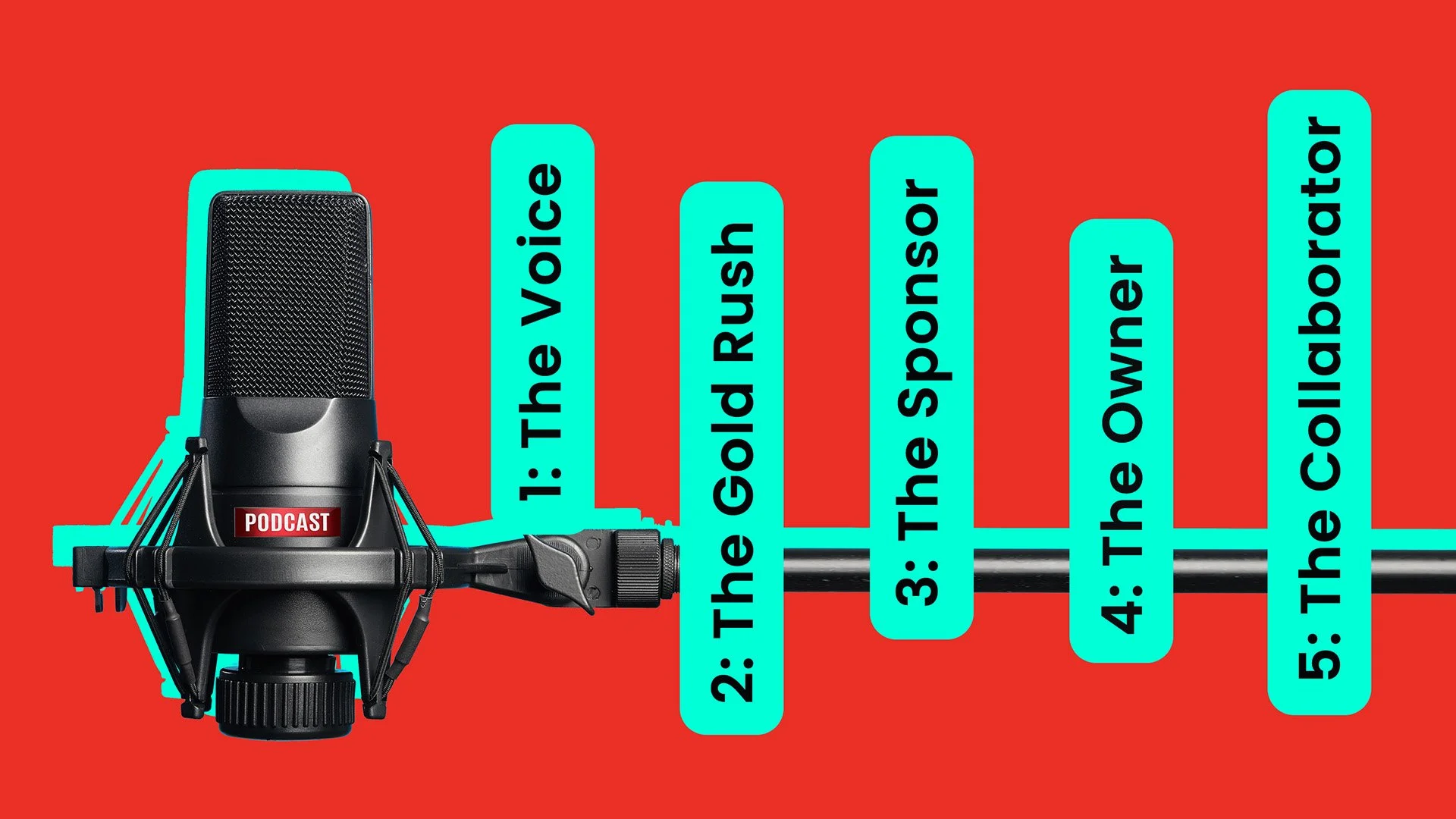
Act One: The Voice (2004 to 2013)
The early podcast had no money and no plan. It had a microphone and a grievance. When Apple folded podcasts into iTunes in 2005, you no longer needed a computer science degree to listen to one, and the medium quietly filled up with people who just wanted to be heard.
No sponsors. No metrics. No strategy decks. Just voice.
Remember that word. It comes back.
Act Two: The Gold Rush (2014 on)
Then Serial happened. One true-crime series turned podcasting from a nerd hobby into appointment listening, and weekly listenership in the US started climbing from roughly one in eight Americans and never really stopped.
Talent did the math fast. Joe Rogan, who started in 2009 in front of a webcam, sold Spotify exclusivity in 2020 for a reported $200 million, then re-upped in 2024 for up to $250 million and kept the right to be everywhere at once. One episode pulled over 26 million views in a single day.
The lesson landed across the industry. The audience wasn't the byproduct. The audience was the asset. Podcasting turned pro, hired producers, and started wearing shoes.
Act Three: The Sponsor
This is where brands showed up. Politely. As tenants.
US podcast ad revenue crossed $2 billion in 2023, and the workhorse was the host-read ad, around 62% of the money. Those spots stick, near 88% recall, because a trusted voice saying "I actually use this" beats a banner every time.
But look closely at what the brand was actually buying. Someone else's audience. Someone else's trust. Rented by the spot, gone the second the budget dried up. Effective, sure. Also temporary. You were a guest in someone else's house, wiping your feet and hoping they'd invite you back.
Act Four: The Owner (now)
Somewhere in the last few years, brands stopped knocking and started building. Their own show. Their own voice. Their own house.
The receipts are good. In Signal Hill's 2025 study, 61% of people who listened to a branded podcast came away liking the brand more, 75% stayed for the entire episode, and 63% said they'd recommend the show to someone else. Adobe surveyed 903 business owners and found an average 38% revenue lift after launching a podcast, with 78% saying it met or beat what they'd hoped for. Branded shows regularly finish near 90% completion, a number most advertising can only fantasize about.
Call it what it is. Digital currency. Attention that you rent vanishes the moment you stop paying for it. A voice that you own compounds. Sponsorship is rent. A show is equity.
Most brands are sitting in Act Four right now, pleased with themselves, and fair enough. But the interesting money has already flipped ahead to the next page.
Act Five: The Collaborator (next)
Here's the part most marketers haven't clocked.
The influencer model is quietly breaking, and the data is holding the knife. 62% of podcast fans trust an ad read by a host they follow. Only 15% trust a social media influencer. That gap is not a rounding error. It's a verdict.
Influencer marketing rents a following and prays it converts. It's a transaction wearing the costume of a relationship, and audiences have gotten very good at spotting the seams.
Aligning with real talent is the opposite move. An influencer posts your product and moves on. A creative partner builds something with you that outlives the campaign. You're not buying their reach. You're building an asset together, and their credibility becomes load-bearing, not decorative. The talent shows up because they actually believe in the thing. Audiences can smell the difference from across the room.
This is advertising changing shape, not dying. The money is already sliding off one-off placements and toward long-term partnerships and integrated storytelling. The old model interrupted the content to sell you something. The new model is the content.
And the best version of it isn't about the product at all. A brand builds a show to tell and celebrate the thing it actually exists to solve. Not "here's what we make." Instead: here's the problem we care about, here are the people living inside it, here's a conversation worth an hour of your life. The product is the reason the show can exist. It is never the reason anyone listens.
That's not a commercial with nicer production. That's a real contribution to the culture, with your name on it.
The Plot Twist
Notice where we ended up.
The Act Five brand is doing precisely what the Act One weirdo in the spare bedroom did in 2004. Showing up with a real voice, because it has something real to say. We built a two-billion-dollar-and-climbing industry, rented it, bought it, and professionalized it, only to arrive right back at the thing that made it work in the first place.
Podcasting didn't evolve away from authenticity. It evolved all the way back to it.
The only difference is that what used to be a hobby is now the strategy. And the brands that understand that aren't hunting for someone to sell them ad slots. They're looking for someone to help them find their voice and say something worth hearing.
Turns out the guys in the spare bedrooms were onto something.
Merrick Creative helps brands build podcasts and original content they own, not ad slots they rent. Every engagement starts the same way: a recorded conversation we call The First Session. Because the best strategy, like the best podcast, begins with someone who actually has something to say.