There's a quiet shift happening in commercial real estate, and the developers paying attention to it are pulling ahead of the ones who aren't.
It doesn't announce itself in headline-grabbing ground breakings or flashy renderings of glass towers. It shows up in old office parks getting second lives. In underutilized retail campuses being stripped down to their bones and rebuilt into something the market actually wants. In the growing realization that what's already standing, if it has the right bones, might be more valuable than a blank piece of dirt.
Chris Clifford, retail broker and developer at Cast Capital Partners, put it plainly in a recent episode of the Place Shapers podcast: "When you look across the nation right now, the projects that are doing extremely well are the ones that take the old and make it new again."
He's right. And the data, the deals, and the demand all point in the same direction.
The Case Against the Blank Slate
For decades, the default playbook in markets like Las Vegas was simple: bulldoze and build. Clear the site, start fresh, maximize your gross leasable area, and move on to the next one. It was efficient. It was predictable. And for a long time, it worked.
But that playbook is showing its age.
The developments that are generating real buzz, the ones driving foot traffic, commanding premium rents, and creating genuine community anchors, aren't the ones that followed the formula. They're the ones that broke from it. That looked at an existing structure and asked a harder, more interesting question: what could this become?
Adaptive reuse, once considered a niche strategy reserved for historic preservation projects or urban infill plays, has moved firmly into the mainstream of smart development thinking. And the reason is straightforward: authenticity can't be manufactured from scratch, but it can be uncovered.
What "The Bones" Are Really Worth
When Clifford and his team at Cast Capital looked at the former office campus that would become The Cliff, a $72 million transformation in Henderson, Nevada, they didn't see a liability. They saw structure, character, and possibility that a ground-up development simply couldn't replicate.
That perspective matters more than it might seem. There is a texture to an existing building that a new one can't fake. The way light moves through a space that wasn't designed to be retail. The unexpected sight lines. The imperfections that become features. These are the qualities that give a place a sense of history, even when that history is only twenty-five years old.
Clifford acknowledged as much when he talked about the instinct, common in Las Vegas, to simply scrape and start over. "It's usually bulldoze and start from scratch," he said. "And this one is actually going to end up doing that differently. So it's got that uniqueness."
That uniqueness isn't decorative. It's structural to the value proposition. In a market where consumers are increasingly skeptical of manufactured experiences and cookie-cutter retail environments, the building that feels like it has a story, even if that story had to be written, holds a competitive edge.
The Hard Truth About Adaptive Reuse
None of this is easy. Clifford was direct about that too, and developers considering this path should take the warning seriously.
Adaptive reuse is not a cost-saving strategy. The infrastructure requirements alone can rival or exceed what you'd spend on ground-up construction for the same square footage. New gas lines, upgraded electrical systems, grease traps, HVAC overhauls. You're not avoiding the hard work. You're trading one kind of hard work for another.
What you're gaining is something harder to put on a pro forma: a development that the market responds to differently. Tenants who are drawn to the project for reasons beyond the rent roll. A community that feels invested in the outcome because the place feels like it belongs to them.
And increasingly, that's what separates the developments that perform from the ones that just exist.
The Larger Trend Worth Watching
The success of adaptive reuse projects isn't happening in a vacuum. It's a response to something real and durable in the way people now relate to the built environment. Post-pandemic, the appetite for places that feel genuine, that have character and reward time spent, has only intensified.
Consumers are done with errand retail. They want destinations. They want places that justify the trip not just with convenience, but with experience. The developers who understand that aren't asking how to fill square footage. They're asking how to create somewhere worth going.
The old and the new aren't opposites. In the hands of the right developer, they're the same project.
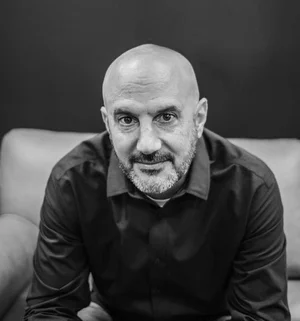
Chris Clifford is a partner at Cast Capital Partners and the developer behind The Cliff, an open-air, experience-first retail destination currently under development in Henderson, Nevada. He was a guest on the Place Shapers podcast, hosted by Todd Fidelman of Merrick Creative.