(If You Actually Use It That Way)
There’s a quiet inefficiency inside most marketing teams. Every week starts the same way. Someone asks, “What are we posting?” A few ideas get thrown around, a couple get made, and by next week… it’s back to zero again.
New ideas. New assets. New scramble. It feels productive. It’s just not very efficient.
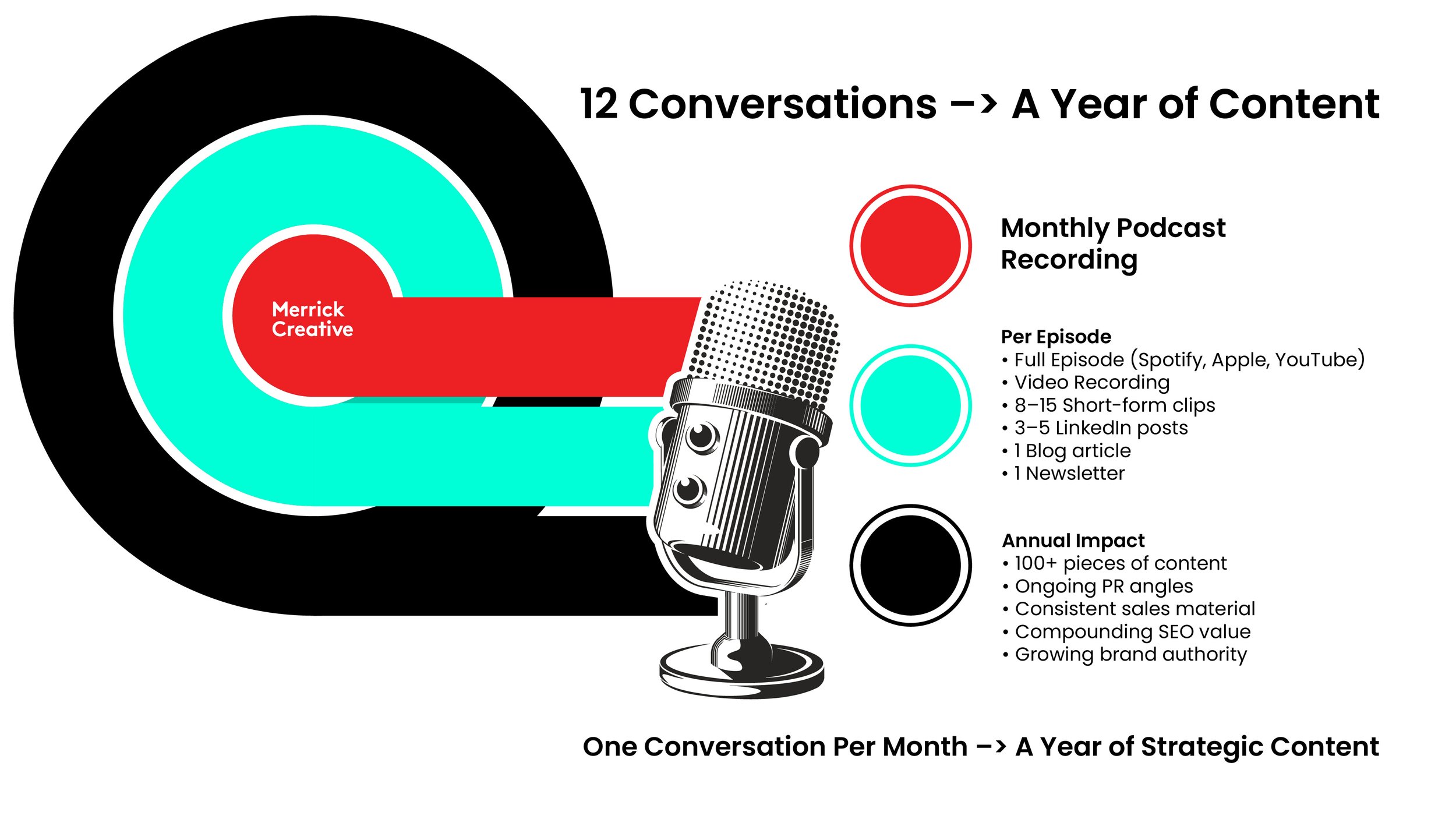
Now compare that to one well-run podcast conversation per month. One guest. One hour. One smart, focused discussion. Done right, those twelve conversations a year can fuel the majority of your outbound marketing. No weekly panic required.
The issue isn’t effort. It’s structure.
The Misunderstanding
Most brands treat a podcast episode like a finished product. Record it. Edit it. Publish it. Move on. Which is a bit like cooking a full meal and only eating the garnish. Technically part of the experience, but not really the point.
The episode isn’t the output. It’s the source material for everything else.
The Shift: From Episodes to an Annual Content Engine
The brands getting real value out of podcasting don’t think in episodes. They think in systems. One conversation per month becomes the foundation for weeks of content. Not filler content, either. Actual ideas, opinions, and insights pulled from a real discussion. From a single episode, you can build short-form video clips, LinkedIn posts, a blog article, newsletter content, YouTube segments, and even sales material that doesn’t feel like it was written in a conference room at 4:47pm on a Friday.
Now zoom out.
Twelve conversations a year does not equal twelve pieces of content. It equals dozens, sometimes hundreds, of assets that all tie back to something real. Something human. Something your audience might actually care about.
Instead of asking, “What should we post this week?” you start asking, “What can we pull from that last conversation?” That question is a lot easier to answer. And on paper, this all sounds incredibly efficient.
Where Most Brands Get Stuck
That last part is important, because this is exactly where things tend to break down. Recording the conversation is the easy part. Turning that conversation into a full content and PR engine is where it gets messy. Because now you need strategy, editing, copywriting, distribution, platform nuance, and consistency. All the unsexy things that actually make the system work.
Most teams don’t struggle with ideas. They struggle with turning one good idea into many useful ones.
The Real Opportunity
The highest-leverage move for a brand is not to become a full-time content factory. It’s to focus on the one thing only they can do well. The conversation. Bring on the right guests. Ask better questions. Have a point of view. Say something worth listening to. That’s the part that matters.
Everything else is infrastructure. Important, but not where your team should be spending all their time. When the infrastructure is right, twelve conversations quietly turn into a full year of marketing.
Why This Matters More Than Ever
Content is not getting easier. It’s getting louder. Everyone is posting. Few are saying anything interesting. Audiences don’t need more content. They need better content. More perspective. More substance. Less filler pretending to be strategy.
Podcast-driven content works because it starts with something most brands skip. A real conversation.
The Bottom Line
You don’t need more content. You need better source material and a system that actually uses it.
One podcast episode will not change your marketing. But one great conversation per month can. The brands that understand this are not just producing podcasts. They are building engines around them.
And the smartest ones? They focus on the mic… and let everything else do its job. 🎙️